
The transition to Zoom Phone represents a foundational modernization of the University’s communication infrastructure. By migrating from our legacy on-premises systems (Siemens/Cisco) to Zoom Phone, a cloud-based telecommunications platform, we are enhancing mobility, reliability, and service flexibility across campus.
...
...
...
POC Responsibilities at a Glance
To ensure a seamless migration, POCs are responsible for completing the intake questionnaire, which captures the following critical data points:
Departmental Operations: Identify all departmental and shared phone lines. POCs will also collaborate with ITS to define call queues, hunt groups, and automated routing configurations.
User Verification: Audit existing personnel records to confirm which team members require an active extension and identify any lines that should be decommissioned.
Hardware Selection: Confirm the hardware needed for each user, ensuring that every individual is equipped with the hardware needed to perform their role effectively.
Accurate reporting ensures uninterrupted service, proper equipment distribution, and preservation of departmental workflows.
Zoom Phone Devices & Hardware
Before completing the questionnaire, it is important to understand the University’s hardware philosophy for the transition to Zoom Phone:
Zoom Phone is designed to function primarily through the Zoom Workplace app on desktop or mobile devices.
Each user is provided one funded device, typically a headset compatible with the Zoom app.
Physical desk phones are generally not recommended and are reserved for shared spaces, reception areas, or high-traffic locations.
All physical device requests will be reviewed and discussed.
- Since physical desk phones should rarely be needed, they may come at an additional cost to the department.
Available Hardware Options:
...
Section 1: The Intake Questionnaire
The intake questionnaire serves as the blueprint for your migration. The information provided will directly inform number porting, call routing configuration, hardware procurement, and system setup.
Deadline: Please complete all required sections within two weeks to avoid migration delays.
| Info |
|---|
The spreadsheet contains telecommunications data from existing records. Because legacy records may be outdated, POCs are responsible for auditing and correcting this information. If lines or users are missing, add them to the bottom of the worksheet. |
Step-by-Step: Completing the Intake Questionnaire
- Open the spreadsheet provided by ITS.
Start with the Departmental Lines tab.
Then complete the User Details tab.
Finish with the Devices & Hardware tab.
Fill out all required fields and provide notes for any entries that may require clarification.
If you are uncertain about a line or user, include it anyway - ITS will verify and confirm all details.
The following sections provide additional guidance and context to assist you in completing each part of the intake questionnaire accurately and efficiently.
A. Departmental Lines: Managing Your Operations
The Departmental Lines tab captures all departmental and shared (non-personal) lines. Follow the steps below to ensure your data is complete and accurate:
Step 1: Review All Departmental Lines (Column D)
Confirm that all existing phone lines are listed that are currently published, assigned, or in use within your department are listed.
Common examples:
Main office/reception lines and fax lines.
Lobby, courtesy, and common area phones.
Classrooms, labs, and training room phones.
- Conference rooms, and meeting room phones.
Emergency phones.
- Shared, or phantom lines.
- Temporary, seasonal, or backup lines.
Step 2: Perform a Directory Audit
To ensure accurate public-facing information and internal call routing:
Review all departmental listings in the UWF Campus Directory.
Confirm that all phone numbers are accurate and up to date.
Document any inaccuracies so that both public contact information and internal routing remain accurate after migration.
Step 3: Confirm the Display Name for Each Department Line (Column B)
Provide the Display Name that will appear on caller ID and within the Zoom interface.
Guidelines for Display Name:
Clearly represents the department or function
Follows University naming conventions
Avoids abbreviations that may confuse callers
If no Display Name is provided, ITS will default to the Purpose or Function line name listed in Column A.
Step 4: Confirm the Location of Any Physical Phones (Column C)
For lines that require physical phones in rooms, provide the building name and room number.
Accurate room-level information is required for installation planning and asset tracking.
Step 5: Indicate the Migration Action for Each Line (Column E)
For each department line, please indicate the desired action for the phone number by selecting one of the following options:
Keep: Retain the existing line and extension during migration.
Delete: Remove the line; the line is no longer in use or will not require migration.
Change: Indicates our records are inaccurate. Use this if a record needs updating or if a new number is required. Provide details in the Notes column.
Move to User: Use this if a general departmental line should now be assigned to a specific person.
Step 6: International Calling Needs (Column E)
- Indicate if the line requires international direct dialing (outbound calls outside the U.S. and Canada).
- International calling may incur additional charges and should only be requested for roles with a demonstrated business need.
Step 7: Notes & Configuration Details (Column F)
Provide additional details for each line to guide ITS configuration, including but not limited to:
- Shared line details
Call queues and hunt groups
Auto-attendants
After-hours routing
Voicemail expectations
Call restrictions
Clear and detailed notes ensure accurate configuration and set up of proper call routing.
B. User Details: Managing Your People
The User Details tab captures individual-level information for all employees who require Zoom Phone service. This includes anyone who is currently Certified Knowledge Worker and has a UWF assigned phone number, shares a line, or answers calls on behalf of the department that will require Zoom Phone services.
The information collected will be used to migrate existing phone numbers, assign new numbers as needed, and configure user phone services appropriately.
Step 1: Review Staff Members
- Confirm all staff members who require phone service are listed.
- Include new hires or temporary staff who need departmental lines.
Step 2: Indicate the Migration Action for Each User (Column E)
For each user, please indicate the desired action for the phone number by selecting one of the following options:
Keep: Retain the existing line and extension during migration.
Delete: Remove the line; the number is no longer needed.
Change: Indicates our records are inaccurate. Use this if a record needs updating or if a new number is required. Provide details in the Notes column.
Step 3: Confirm Hardware Needs (Column F)
Please review to the Zoom Phone Devices & Hardware section above for additional information.
Select the one funded hardware option per user:
Wired (USB-A)
Wired (USB-C)
Wireless (Bluetooth)
Physical Desk Phone (if justified)
No Hardware Needed
Users with a functional headset do not need to request new hardware.
Step 4: Confirm Core Features (Column G & H)
To ensure users have the appropriate level of access, please verify the following functional requirements:
SMS Messaging: Determine if the user requires the ability to send and receive text messages via their UWF-assigned number
International Direct Dialing: Identify users whose role requires calling outside the United States and Canada. International calling may incur additional charges and should only be requested for users with a demonstrated business need
C. Hardware Selection: The "One Device" Rule
The Devices & Hardware tab is used to capture all physical phone devices and related hardware required by your department as part of the Zoom Phone migration. This includes desk phones, common area phones, conference room devices, courtesy phones, and any other telephony-related hardware. The information provided will be used to assess device needs, validate business justifications, determine costs, and plan procurement and installation activities.
...
Review Zoom Phone Basics
We recognize that many Departmental POCs may have limited familiarity with Zoom Phone at this stage. The resources below provide helpful background and guidance for your review:
- Zoom Phone at UWF: foundational resource that serves as a starting point for users to review the basics of Zoom Phone, including short, informative videos that provide a helpful overview of Zoom Phone.
- Zoom Phone Reference Guide: more comprehensive, in-depth resource that details Zoom Phone features, settings, and functionality.
- Getting Started with Zoom Phone: step-by-step guide that will be shared with end users closer to the cutover date to assist with initial setup and onboarding.
Zoom Phone Devices & Hardware
Before completing the questionnaire, it is important to understand the University’s hardware philosophy for the transition to Zoom Phone:
Zoom Phone is designed to function primarily through the Zoom Workplace app on desktop or mobile devices.
Each user is provided one funded device, typically a headset that connects directly to your computer (via USB or Bluetooth) and is fully compatible with the Zoom app.
A business justification is required to evaluate the need for traditional physical desk phones (see below for additional details). All requests for traditional physical desk phones will be reviewed and discussed with the department.
Because traditional physical desk phones are expected to be used only in limited scenarios, they may result in additional cost to the department.
Users with a functional headset, or are currently comfortable with using just their computer's microphone and speakers during a videoconferencing call, do not need to request new hardware.
| Info | ||
|---|---|---|
| ||
If a physical desk phone is needed, provide a clear business justification explaining why a softphone solution is not sufficient. Justifications may include safety requirements, shared use, public access, accessibility needs, or operational constraints. Describe how the device will be used (e.g., reception desk, lobby phone, conference room, emergency use, shared workspace). Please add this business justification to the notes section for each line. |
Available Hardware Options:
| Hardware Option | Link | Picture | Connection Type | Best For... |
| Bluetooth Wireless | Logitech Zone 305 |
| Wireless | Users needing high mobility. Note: Some desktop computers may require a USB Bluetooth adapter (dongle). See below for additional details. |
| Physical Desk Phone | Poly Edge E350 |
| Corded | Requires Business Justification. Reserved for shared spaces, reception areas, or high-volume use cases (long on-hold times, etc.) |

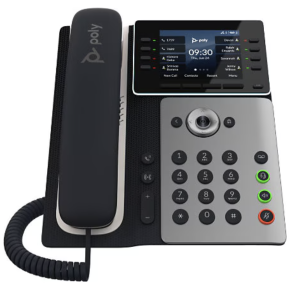
Fundamental Differences for Individual User Phones
The move to Zoom Phone shifts campus phone service for a particular person from being tied to a physical device to being tied to a user account. In a traditional phone system, a phone number belongs to a desk phone in a specific location, and features like voicemail and call forwarding are configured directly on that device. With Zoom Phone, your number belongs to you, and your desk phone (if you are issued one) is just one of several ways to make and receive calls, alongside the Zoom app on your computer or mobile device. This change improves flexibility and accessibility. Voicemail is no longer limited to a desk phone - it is tied to your account and can be accessed through the Zoom app or email, often with transcription and easy sharing options. Call handling is also more dynamic. Instead of manually forwarding calls from a phone, Zoom Phone allows calls to ring multiple devices at once and supports advanced routing such as business hours, after-hours handling, and delegation—all managed through a web portal or app rather than the device itself. A key operational difference occurs when an employee leaves. In a traditional system, the desk phone often remains active, allowing someone to physically go into the office and forward calls to another number to prevent missed calls. This creates a temporary safety net even before ITS reconfigures the line. In Zoom Phone, however, all call handling is tied to the user account. Once a user is removed, their phone number, voicemail, and any forwarding or routing settings are also removed. The desk phone (if one was assigned) will no longer receive calls until it is reassigned, and there is no ability to forward calls from the device after the user is deactivated. Because of this, planning ahead is critical. Before removing a user in Zoom Phone, their phone number must be reassigned or call coverage must be set up (such as forwarding, delegation, or call queue routing). If this step is missed, calls may not reach the appropriate person. Key takeaway: Traditional phones are tied to a place. Zoom Phone is tied to a person. Call coverage must be intentionally configured in advance - not handled at the device after the fact.
|
|

The Intake Questionnaire
The intake questionnaire serves as the blueprint for your migration. The information provided will directly inform number porting, call routing configuration, hardware procurement, and system setup.
Deadline: Please complete all required sections within two weeks to avoid migration delays. Your particular deadline is indicated on your Zoom Phone Migration Jira ticket.
| Info | ||
|---|---|---|
| ||
The pre-populated Intake Questionnaire was created based on information from three sources:
Because this information may be outdated, POCs are responsible for auditing and correcting this information. If lines or users are missing, add them to the bottom of the worksheet. If lines are no longer needed, or can be combined with other departments (for example, a digital on-line fax to replace a physical fax machine), mark the lines to be deleted. |
Step-by-Step: Completing the Intake Questionnaire
- Open the spreadsheet provided by ITS. It has been shared as edit to all Departmental POCs reported on the department hierarchy spreadsheet. If you find it helpful to have more eyes on this information, we recommend sharing this spreadsheet as “view only” to others. Editing access should be limited to Departmental POCs only.
Start with the Departmental Lines tab. See below for detailed explanations of what you see pre-populated, and what answers we need from you.
Then complete the User Details tab. See below for detailed explanations of what you see pre-populated, and what answers we need from you.
- Check for completeness. Verify that you have responded to all required fields and provide notes for any entries that may require clarification. If you are uncertain about a line or user, include it anyway - ITS will verify and confirm all details. At any point during this process, comment on the Zoom Phone Migration Jira ticket for clarification/assistance.
- Respond on the Zoom Phone Migration Jira ticket that the spreadsheet is complete. Once we hear from you that your part is complete, we can start the configuration and hardware ordering/staging process, which gets us one step closer to cutover!
The following sections provide additional guidance and context to assist you in completing each part of the intake questionnaire accurately and efficiently. These notes apply to both sheets:
 indicates the column is locked for editing by ITS. No changes are needed in this column.
- "Undecided" is a choice in all drop-down options. It is only to be used if you accidentally make a choice, but decide later you aren't sure if that's the right choice. (There's no way to easily blank it out again, so this option provides a way for you to do that.)
Departmental Lines
The Departmental Lines tab captures all departmental and shared (non-personal) lines. Follow the steps below to ensure your data is complete and accurate.
Step 1: Review All Departmental Lines
Confirm that all existing phone lines currently published, assigned, or in use within your department are listed.
Common examples:
Main office/reception lines and fax lines.
Lobby, courtesy, and common area phones.
Departmental classrooms, labs, and training room phones.
- Conference rooms, and meeting room phones.
- Phones needed for emergencies in your area.
Step 2: Perform a Directory Audit
To ensure accurate public-facing information and internal call routing:
Review all departmental listings in the UWF Campus Directory and your UWF external website
Confirm that all phone numbers are accurate and up to date, and initiate any changes where necessary
Document any inaccuracies so that both public / campus directory contact information and internal routing remain accurate after migration
Please note that we will use the information you provide in the intake questionnaire for the Zoom Phone migration, regardless of any conflicts with published information.
Step 3: Complete the Departmental Lines spreadsheet tab
For each of the listed phone numbers, review and enter the appropriate information as described below.
| Column Heading | Explanation | |
|---|---|---|
| Department |
| This shows the department information only if the template has more than one department from the campus directory reflected on it. Example: 21 - Information Technology Services |
| Phone Number |
| The 10-digit number of the phone line. 4-digit dialing will be enabled, and will be as it is currently, which is the last 4 digits of the phone number. (The only exception to that is if the last 4 digits start with a 0. In those cases, the extension will be prepended with a "1", so those numbers will have 5-digit dialing enabled. There are very few numbers affected by this issue.) |
| Current Telecom Display Name |
| This is the name associated with this phone number, and appears as "who is calling" from the phone currently. |
| Updated Display Name | This is the name the phone will have in Zoom phone, and will show as "who is calling". Since the number is also available to be searched in the Zoom directory, this should be as descriptive as possible, so it can be distinguished from other departmental lines. Please recommend a name, but ITS reserves the right to change it, based on other departmental responses we receive.
| |
| Location | ITS has provided the bldg/room of the phone, if it was known to us. If you are keeping the departmental line, but you will be requesting call handling so that no physical phone is needed, please leave this field blank. Otherwise, please enter the bldg/room for this departmental phone line. | |
| Assigned Telecom # | For each department line, please indicate the desired action for the phone number by selecting one of the following options:
| |
| Hardware Needs | This option helps us understand what physical device should be associated with this phone line
Please note, we highly recommend converting physical fax machines to Zoom Online Fax. With no physical constraints for using Zoom Online Fax, you may be able to share a single fax line among multiple departments (at the college level, for instance). | |
| International Calling | All Zoom Phone calling plans allow calling to the US and Canada. The "long distance PIN" used in the current phone system will go away for everyone.
Please note: International Calling is enabled/disabled for an individual user (see the User Details section below) or for a specific department phone line. Therefore, if the phone line is connected to a physical desk phone, anyone using that phone can dial internationally. | |
| Current Physical Phone Location | The purpose of this column is to tell ITS where the old phone / equipment is physically located for this phone line, so it can be uninstalled / picked up after cutover. This may or may not match the "Location" column, where the phone line is intended to be upon cutover. (The two columns may contain different values if you know the phone line needs to move during this migration period, or if you won't have a physical phone for this line going forward.) | |
| Notes | This field contains any additional information we found that may be pertinent about the phone line. It should be augmented with your notes, as described in the situations above. The Notes column is one of the most important parts of the questionnaire. Providing detailed context here helps ITS accurately configure your department’s phone system and reduces the need for follow-up clarification. Provide additional details for each line to guide ITS configuration, including but not limited to:
Clear and detailed notes ensure accurate configuration and setup of proper call routing. | |
| Current Billing Index |
| This field is informational only, and is the last known index charged for the phone line. For more information on how billing works with Zoom phone, please refer to Zoom Phone Billing Guidelines. |
If we are missing departmental phone lines, please fill in the information for the phone lines we missed in the bottom section, and explain them as well as you can in the Notes column.
User Details
The User Details tab captures individual user information for all employees who require Zoom Phone service.
The information collected will be used to migrate existing employee phone numbers and configure user phone services appropriately.
| Info | ||
|---|---|---|
| ||
Users you should expect to see are anyone that meets all of the following criteria:
Examples of users who will not have entries on the User Details tab include:
|
Step 1: Review Staff Members
- Confirm all staff members who require phone service based on the criteria above are listed.
- Review and/or input all staff member details, including their name, email, office location, and direct line assignment.
- Include new hires or temporary staff who will also need a Zoom Phone license assigned in the secondary section below.
- Now is a good time to ask staff to check their own campus directory information for accuracy
Please note that we will use the information you provide in the intake questionnaire for the Zoom Phone migration, regardless of any conflicts with published information.
Step 2: Complete the User Details spreadsheet tab
For each of the listed phone numbers, review and enter the appropriate information as described below.
| Column Heading | Explanation | |
|---|---|---|
| Department |
| This shows the department information only if the template has more than one department from the campus directory reflected on it. Example: 21 - Information Technology Services |
| Phone Number |
| The 10-digit number of the phone line. 4-digit dialing will be enabled, and will be as it is currently, which is the last 4 digits of the phone number. (The only exception to that is if the last 4 digits start with a 0. In those cases, the extension will be prepended with a "1", so those numbers will have 5-digit dialing enabled. There are very few numbers affected by this issue.) |
| Current Telecom Display Name |
| This is the name associated with this phone number, and appears as "who is calling" from the phone currently. In Zoom phone, the name of the person will be derived from the user's account, and there is no override capability. (The user may be able to modify their caller ID, but when searching for them in the Zoom directory, only their name will be searchable. |
| First Name |
| The preferred first name associated with the user assigned to this phone line. |
| Last Name |
| The last name associated with the user assigned to this phone line. |
| The email address associated with the user's Argonet account (the original email address, not an email alias they may have chosen.) This is used to connect the user's account to their phone line. | |
| Office Location | Please update the bldg/room where the individual user is located, if the information provided by ITS from the campus directory is not accurate. If no physical desk phone is requested, this location is still requested if any other hardware needs to be delivered to the end user. If the user happens to have multiple offices on campus, please indicate the other locations in the Notes column. | |
| Assigned Telecom # | For each department line, please indicate the desired action for the phone number by selecting one of the following options:
| |
| Hardware Needs | Please review the Zoom Phone Devices & Hardware section above for additional information. Select the one funded hardware option per user:
* If you are unsure whether a user requires a USB Bluetooth adapter, confirm whether they are using a desktop or laptop. In most cases, laptops have built-in Bluetooth and will not require an adapter. ITS can assist with determining compatibility as needed. | |
| Enable SMS / Text Messaging on Zoom |
| |
| International Calling | All Zoom Phone calling plans allow calling to the US and Canada. The "long distance PIN" used in the current phone system will go away for everyone.
Please note: International Calling is enabled/disabled at the user level, so even if enabled, it is only available where the user is logged into the Zoom phone app (or their own assigned desk phone). For example, a user who has international calling enabled cannot call from any department line in the reception area or main office, or anyone else's phone where International Dialing has not been enabled. | |
| Full Voicemail Transcription | This option indicates if the user would like any voicemails received sent to their email address. If enabled, the voicemails will be retained in email for the full retention period of email (currently 10 years). If enabled, the Zoom Phone system will send a voice recording and text transcription of your voicemail to your email (from no-reply@zoom.us), and the subject line of the email will read as: New Voicemail from <person> <phone number> to <person> <phone number> on <date> <time>.
| |
| Current Physical Phone Location | The purpose of this column is to tell ITS where the old phone / equipment is physically located for this phone line, so it can be uninstalled / picked up after cutover. This may or may not match the "Location" column, where the phone line is intended to be upon cutover. (The two columns may contain different values if you know the phone line needs to move during this migration period, or if there won't be a physical phone for this line going forward.) | |
| Notes | This field contains any additional information we found that may be pertinent about the phone line. It should be augmented with your notes, as described in the situations above. The Notes column is one of the most important parts of the questionnaire. Providing detailed context here helps ITS accurately configure your department’s phone system and reduces the need for follow-up clarification. Provide additional details for each line to guide ITS configuration, including but not limited to:
Clear and detailed notes ensure accurate configuration and setup of proper call routing. | |
| Current Billing Index |
| This field is informational only, and is the last known index charged for the phone line. For more information on how billing works with Zoom phone, please refer to Zoom Phone Billing Guidelines. |
Use the section at the bottom to add any users who are missing from your list, if necessary.
The quality and completeness of your intake questionnaire directly impacts the success of your department’s migration. Taking the time to gather accurate information now will significantly reduce delays, rework, and post-migration issues.
Once you have completed the two tabs, you are ready to let ITS know you're finished!
Ideas for Gathering Information for the Intake Questionnaire
To make this process more manageable, POCs are strongly encouraged to leverage existing communication channels (through supervisors) rather than gathering all information independently. If you're not quite sure how to get started, here are some ideas for ways to gather the information. It may be necessary to use a combination of strategies to obtain all the answers you need. If you are struggling, please don't hesitate to reach out on the ticket.
Recommended Approach
- Collaborate with Leadership: Work with your area's leadership to confirm staffing needs, shared lines, and operational workflows. Ask them to gather the information for their direct reports.
- Use a Team Meeting: Leverage an upcoming staff meeting(s) to review departmental lines, hardware needs, and call handling. This helps gather input efficiently and ensures consistency, and allows everyone to ask questions.
- Survey each person individually: Reach out individually for role-specific details such as feature needs (SMS, international calling) or hardware preferences. Below is a sample draft email you can use to obtain the necessary information. Since many of the employees in your area may not know much about Zoom phone, they will need that background as well, so you can send them to this guide, or the Zoom Phone at UWF and Getting Started with Zoom Phone links as well.
| Info | ||
|---|---|---|
| ||
Subject: Action Required: Zoom Phone Migration & Information Request The University of West Florida is migrating from its current phone system to Zoom Phone. This upgrade will provide a more flexible, modern communication experience by allowing you to make and receive calls directly through the Zoom Workplace app on your computer or mobile device. What This Means for You Our department will be adopting a “soft phone” approach, meaning most users will no longer use a traditional desk phone. Instead, calls will be handled through the Zoom app on your computer (or your personal cell phone, if so desired). Each user is eligible for one funded device (typically a headset), and traditional desk phones will only be provided in limited cases where there is a clear business need (e.g., shared spaces, reception areas, or specific operational requirements). Modify this statement based on your department's willingness to purchase desk phones for each person. Information Needed To ensure a smooth transition, I need a few details from each of you. Please review and reply with the following information:
If you select a Physical Desk Phone, please include a brief business justification explaining why a Zoom (soft phone) solution will not meet your needs. Timeline Please reply with your responses by [INSERT YOUR INTERNAL DEADLINE, GIVING YOU TIME TO SUBMIT THE INTAKE QUESTIONNAIRE] to help us stay on track with the migration timeline. If you’re unsure about any of the options, feel free to reach out - I’m happy to help. |
Migration Logistics
The transition to Zoom Phone is designed to be a highly supported experience. ITS is in this with you every step of the way.
The Migration Overview
The journey from legacy Siemens or Cisco systems to Zoom Phone follows a structured three-stage process:
Assessment phase: 2 weeks
Departments collect and verify information, and send that information back to ITS.
Configuration phase: 6-10 weeks, hopefully
ITS will email all end users and ask that they log into the Zoom app, if they haven't already. (This action is required so that a Zoom admin can assign them a phone.) ITS then configures the Zoom phone with all the information provided, orders/stages the requested devices, and follows up with individual departments who need additional configuration/support (police department, for example). When this phase is complete, we'll be waiting on the actual cutover.
Cutover phase: cutover “day” and the following few days
At a specific day/time in the future, all phones will be cutover to Zoom phone at one time. This date is yet to be nailed down between UWF, AT&T, and Zoom, and their porting partner, Synch. As soon as we know, we'll let you know. We are targeting June 2, 2026, but it could easily be before or after that date. There may be temporary phone outages during this phase. We will be enlisting help from as many people as possible on the cutover day, but as you can imagine, visiting places where 1,400 phones are currently deployed will take a good bit of time.
The "Day of" Experience
On the scheduled cutover
...
If a physical phone or specific hardware is required, complete the Devices & Hardware tab with the following information:
Business Justification: Provide a clear rationale for requesting a physical device, explaining why a softphone solution is insufficient (e.g., operational requirements, accessibility, safety, or compliance considerations).
Location Accuracy: Specify the building and room number where the device will need to be installed.
Note that physical devices may result in additional costs to the department.
All physical hardware requests will be reviewed and confirmed within your department’s Jira migration ticket prior to approval.
Section 2: Migration Logistics
The transition to Zoom Phone is designed to be a highly supported experience.
As an Early Adopter, your department will follow an accelerated timeline that allows for direct collaboration with the ITS Migration Team.
The Migration Overview
The journey from legacy Siemens or Cisco systems to Zoom Phone follows a structured six-stage process:
Kickoff & Discovery: ITS reaches out to Department Heads and Business Managers. Departments identify their migration team, consisting of decision makers and operational support.
Data Collection: POCs audit their departmental data provided by ITS, to confirm migration actions and verify hardware selections. If needed, ITS will schedule an intake meeting, which is a formal discovery session where ITS walks the POCs through the intake questionnaire, discussing hardware needs and departmental call flows.
The Porting Window: Once the questionnaire is finalized, IT submits a port request to the carrier. This triggers a mandatory 10-day lead time required by service providers. ITS will follow up with you to confirm your official port date.
Preparation & Distribution: While the carrier processes the port request, the Telecom team will order and programs physical handsets and configure all departmental lines, as needed. Headsets are sorted and delivered to POCs for distribution.
Go-Live: At your scheduled port time, legacy phones go offline, and numbers will migrate and become active in the Zoom Workplace app.
The "Day of" Experience
...
date, your legacy Siemens or Cisco phone will stop receiving calls.
...
Instant Activation: Your university number becomes instantly reachable via the Zoom app on your desktop and mobile device.
Communication: All migrated users will be sent
...
the Getting Started with Zoom Phone page, which provides detailed instructions to guide your account setup.
- On-Site Activity:
...
- Zoom Phone onsite teams will be on-site to collect legacy physical phones and assist
...
- with any new device setups. Please be patient as we make the rounds to all areas of campus!
Post-Migration Support
We are committed to service continuity. Following your migration, the following support structures are in place:
Immediate Assistance: POCs have a direct line to the project team via
...
commenting on their Jira migration ticket to resolve routing discrepancies immediately.
Technical Troubleshooting: Individual users should contact the ITS Help Desk at (850) 474-2075 or helpdesk@uwf.edu.
Customized Trainings: The Help Desk is available to schedule 1-on-1 or group training sessions
...
for departments requiring a deeper dive into modern features.
See the Zoom Phone Migration FAQ for more information on Zoom Phone project process & expectations.
FAQs
FAQs
| Expand | ||
|---|---|---|
| ||
Our current aging on-premises switches are reaching end-of-life. Moving to Zoom Phone reduces operational risk, eliminates significant points of failure, and provides modern features and seamless mobile integration. |
...
| title | Can I practice using Zoom Phone before my migration date? |
|---|
...
| Expand | ||
|---|---|---|
| ||
Yes! Your POC will need to complete the intake questionnaire and select "Keep" in the Migration Action column for each line. |
| Expand | ||
|---|---|---|
| ||
The project only funds one. If both are needed, the department may need |
...
| title | What happens to my physical desk phone? |
|---|
...
to provide additional funding or justification. |
| Expand | ||
|---|---|---|
|
...
| |
Following cutover, the Zoom Phone onsite teams will visit your office to collect legacy Cisco or Siemens hardware. |
| Expand | ||
|---|---|---|
| ||
There is no additional cost to departments for the new Zoom Phone service for existing users or for standard funded hardware (one device per user). |
| Expand | ||
|---|---|---|
| ||
Yes, you can download the Zoom Workplace desktop or mobile app by following these linked instructions. Once installed, simply sign in using your UWF credentials after launching the software. |
| Expand | ||
|---|---|---|
| ||
Yes, you can use the Zoom Workplace mobile app on your personal mobile phone, which will use your assigned university number for calls and texts, keeping your personal number private. |